
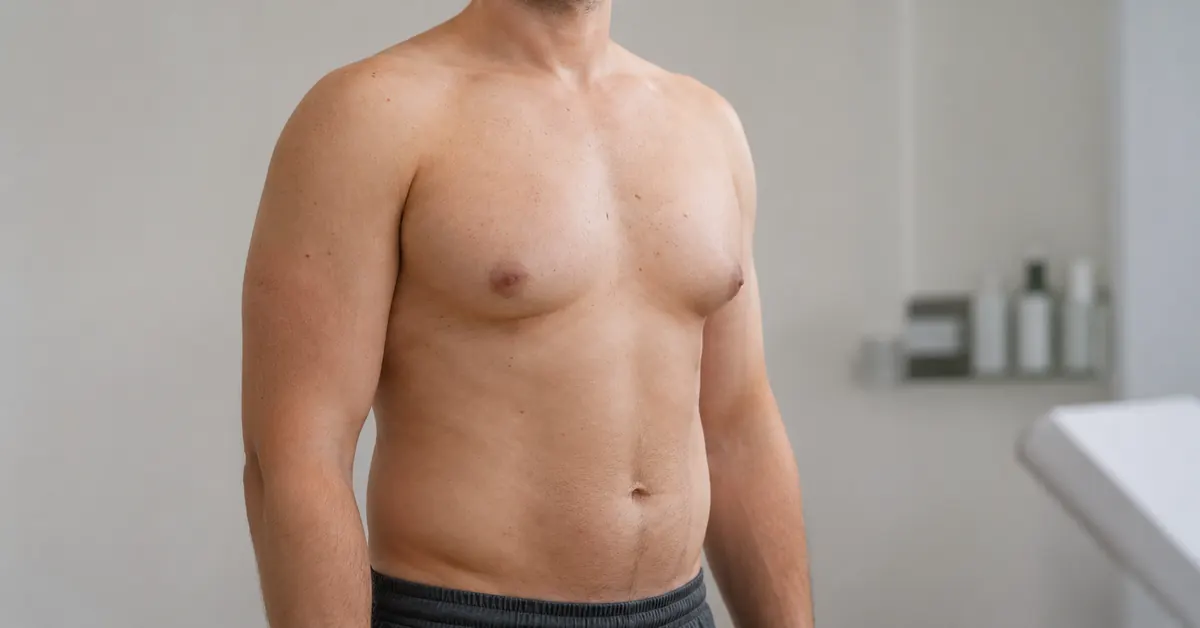
Enlarged breasts in men can be caused by an increase in glandular tissue, an accumulation of fatty tissue, or a combination of both. This condition is commonly called gynecomastia and can appear at different stages of life, from puberty to later adulthood.
Although gynecomastia is usually not a serious health problem, changes in the appearance of the chest can cause discomfort and dissatisfaction with one’s appearance. The good news is that there are different treatment and correction options, depending on the cause and characteristics of the breast enlargement.
Below we explain what gynecomastia in men is, why it develops, when a medical evaluation is needed and what surgical male breast reduction looks like.
What is gynecomastia in men?
Gynecomastia is an enlargement of the glandular breast tissue in men. It can affect one or both breasts, and the degree of change varies from person to person.
Some men notice a slight increase in tissue directly beneath the nipple, while in others the breasts may become more prominent and change the contour of the chest. Tenderness or pain to the touch may also be present.
It is important to distinguish true gynecomastia, in which the glandular tissue is enlarged, from pseudogynecomastia, which is caused mainly by fat accumulation in the chest area.
What are the most common causes of gynecomastia?
Gynecomastia can develop for various reasons. One of the most common mechanisms is a change in the balance between the effects of estrogen and testosterone on breast tissue.
Hormonal changes
Hormonal changes during puberty can lead to a temporary enlargement of the male breasts. In many cases, pubertal gynecomastia resolves on its own over the following months or years.
Gynecomastia can also appear later in life, when the levels and effects of sex hormones change.
Excess body weight
Excess fatty tissue can contribute to a larger chest in men. In such cases it is often pseudogynecomastia, although excess fat can also coexist with true gynecomastia.
Weight loss can help reduce fat deposits, but it will not necessarily remove glandular tissue that has already enlarged.
Medications and anabolic steroids
Certain medications, hormonal preparations and anabolic steroids can contribute to the development of gynecomastia. If you suspect the change is related to a therapy, it is important to talk to your doctor and not to stop prescribed medications on your own.
Certain medical conditions
Disorders of the testicles, thyroid gland, liver or kidneys, as well as some other medical conditions, can be associated with gynecomastia. That is why, with new or unexplained changes, it is important to determine the possible cause before considering aesthetic correction.
How to tell gynecomastia apart from chest fat?
With true gynecomastia, firmer or rubbery tissue can often be felt beneath the nipple, while with pseudogynecomastia the enlargement is mainly related to fatty tissue.
However, it is not always possible to reliably distinguish these conditions by appearance or touch alone. A doctor may recommend additional tests or an ultrasound examination when needed.
If you notice a hard lump on one side, nipple discharge (especially bloody), nipple retraction or skin changes, you should see a doctor promptly to rule out other causes.
Can gynecomastia go away without surgery?
Whether it can resolve on its own depends on the cause and how long the gynecomastia has been present. In adolescents, the condition often resolves without surgical treatment.
In cases related to medications or other medical conditions, treating the underlying cause can lead to improvement. When the enlargement is mainly due to fat deposits, managing body weight can change the appearance of the chest.
However, in long-standing gynecomastia with significant glandular tissue, the change may not disappear after weight loss or exercise. In such situations, surgical correction can be considered after an appropriate medical evaluation.
Gynecomastia surgery - how is male breast reduction performed?
The goal of surgical gynecomastia correction is to reduce the enlarged tissue and create a more balanced male chest contour. The surgical method depends on whether glandular tissue, fatty tissue or a combination of both predominates.
At our clinic in Novi Sad, Serbia, we perform male breast reduction, and the appropriate surgical technique is chosen based on an individual examination and the characteristics of the change.
Removal of glandular tissue
When the breast enlargement is mainly caused by prominent glandular tissue, the surgeon may recommend removing it surgically. The incision is often placed along the edge of the areola, depending on the anatomy and the chosen technique.
Liposuction of the male chest
When excess fatty tissue predominates, one option is liposuction. This method removes localized fat deposits using special cannulas, with the aim of reshaping the chest contour.
It is important to note that liposuction alone is not always enough to remove firm glandular tissue.
Combined surgical technique
For men who have both excess fat and enlarged glandular tissue, a combination of liposuction and surgical removal of glandular tissue can be used. When there is significant excess skin, additional corrections are sometimes needed.
How long does gynecomastia surgery take?
At our clinic, male breast reduction surgery usually takes approximately one to two hours, depending on the extent of the procedure and the technique used.
The operation can be performed under local or general anesthesia, and the need for a stay at the clinic is determined individually. With some procedures you can go home the same day, while in other cases a one-night stay is recommended.
Recovery after gynecomastia surgery
Recovery after male breast reduction depends on the type of surgery, the amount of tissue removed and the individual characteristics of the patient.
During the first few days, swelling, bruising, tightness and discomfort in the treated area may occur. These are common after surgery, but it is important to follow your surgeon’s instructions and attend scheduled check-ups.
The first week after surgery
During the first week, it is recommended to avoid strenuous physical activity. Returning to usual social activities is often possible after about seven days, but the exact time depends on the type of work you do and how your recovery progresses.
Wearing a compression vest
After surgery, wearing a special compression vest for the chest is often recommended. It supports the treated area and can help control swelling during healing.
The compression vest is usually worn for four to six weeks, following your surgeon’s individual instructions.
Returning to training and physical activity
Intense workouts, heavy lifting and activities that strain the chest muscles are usually limited for a while. A return to sports is often considered after about one month, with your surgeon’s approval.
When are the final results visible?
The change in chest contour may be visible soon after surgery, but swelling and the healing process affect the final appearance. The tissue needs time to settle, and scars gradually mature over the following months.
Does gynecomastia surgery leave scars?
Any surgical procedure that involves an incision can leave a scar. Its size and position depend on the chosen technique and the extent of the correction.
In some procedures, incisions are placed along the edge of the areola to make them less noticeable. However, completely invisible scars cannot be guaranteed, because healing also depends on individual skin characteristics.
What are the possible risks of gynecomastia surgery?
Like other surgical procedures, gynecomastia surgery carries certain risks. Possible complications include bleeding, fluid accumulation, asymmetry, changes in nipple sensation, contour irregularities and poor scar healing.
Before making a decision, it is important to discuss the expected benefits, possible complications and realistic results with your surgeon. Any possible medical causes of gynecomastia should also be evaluated.
Can gynecomastia come back after surgery?
The results of surgical correction can be long-lasting, but renewed breast enlargement cannot be completely ruled out. Changes can occur due to significant weight gain, hormonal disorders or other factors that contributed to the original gynecomastia.
That is why identifying the cause and an appropriate medical evaluation are important even before surgery.
Gynecomastia correction in Serbia - Clinic Olymp
If you are considering gynecomastia surgery, the first step is a conversation with a specialist and an assessment of whether surgical correction is the right option for you.
Our clinic in Novi Sad provides plastic, reconstructive and aesthetic surgery, including male breast reduction surgery. You can find approximate prices in our price list.
If you live abroad or would like to learn about your options first, you can book a free video consultation with one of our surgeons. During the call you can ask questions about the surgery, preparation, recovery and next steps. An online consultation does not replace an in-person examination when one is needed for a final assessment.
Would you like to find out whether gynecomastia surgery is the right option for you? Talk to one of our surgeons and learn about your correction options.
Click here to book a free video consultation with our surgeon →